
In this article
Choosing a personal-training format is not simply a choice between paying for more or less attention. Private, semi-private, and hybrid coaching create different working arrangements. Each can be useful, but each asks something different of the client, the coach, and the training week.
The most expensive format is not automatically the best fit. Nor is the most flexible arrangement necessarily the easiest to follow. A useful decision begins with the problem coaching needs to solve: learning unfamiliar movements, building a repeatable strength routine, preparing alongside tennis, returning after time away, or keeping training workable through travel and demanding work periods.
Start with the service you need before comparing the price per session. The real comparison is how instruction, programming, accountability, environment, and independent work will be organized.
Private coaching: maximum room to individualize
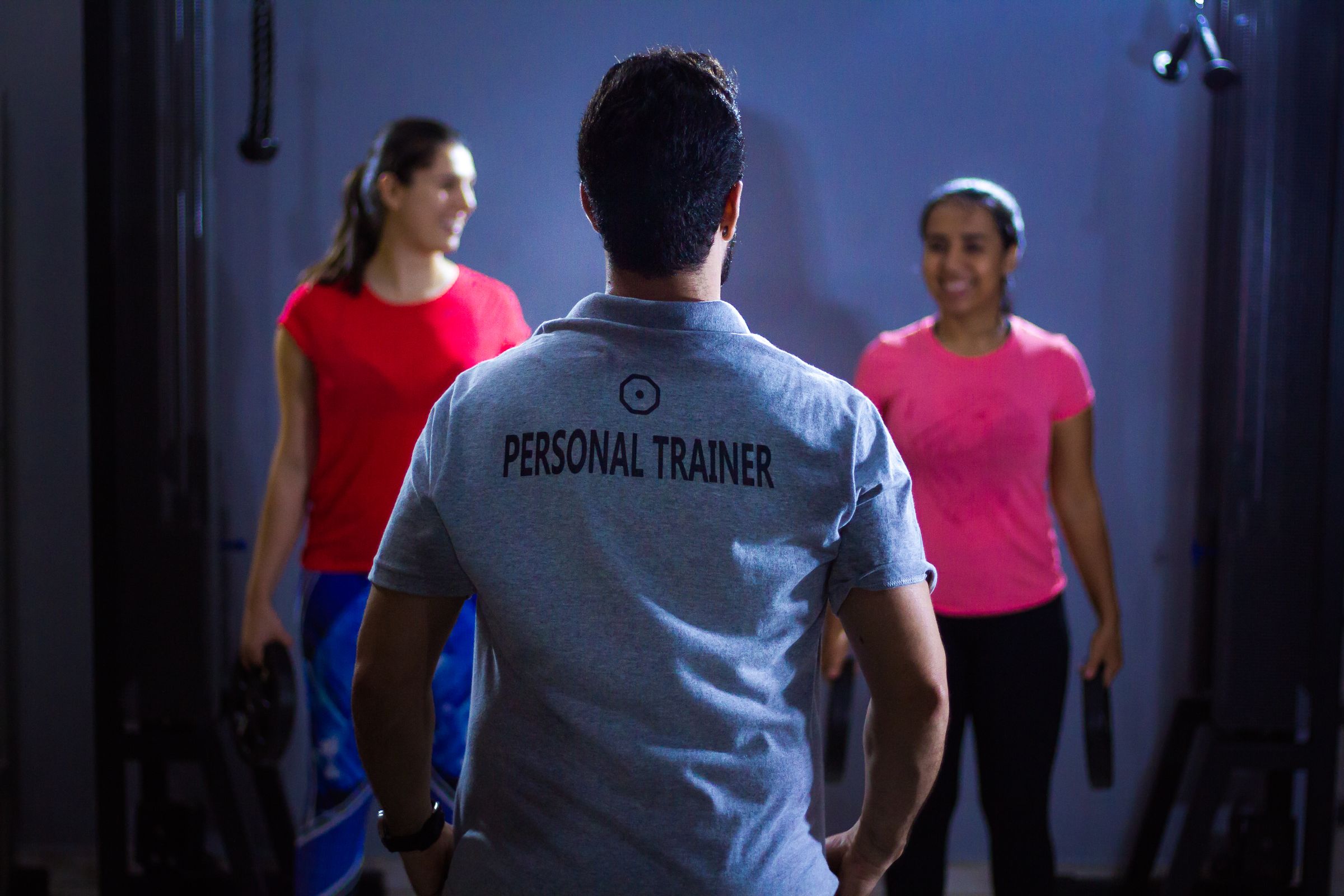
Private coaching gives one client the session. That can be valuable when the starting point needs careful observation, the program is changing frequently, or the person wants time to understand equipment, movement options, and the reasoning behind the plan.
One-to-one work also makes it easier to adjust the pace of a session without coordinating with another participant. The coach can spend more time on a new exercise, simplify the plan when the client arrives tired from travel, or reorganize the session around a change in the rest of the week.
That attention still needs a purpose. Private coaching should not become an hour of constant novelty or dependence on the trainer. A useful program should gradually make the client more capable of understanding the main tasks, recognizing the intended effort, and completing agreed independent work where appropriate.
Private training is often the clearest starting point when goals, training history, symptoms, scheduling, or the available space make a shared arrangement difficult. It is not a clinical service. Persistent symptoms, red flags, or questions requiring diagnosis or rehabilitation remain matters for an appropriately qualified healthcare professional.
Semi-private training: shared time needs genuine compatibility
Semi-private training is more than two private sessions happening near each other. It works best when the participants can share the environment, the coach's attention, and enough of the session structure without either person receiving an unsuitable program.
Compatibility does not require identical strength or identical goals. Two people can use different loads, ranges, exercises, or progressions. The important question is whether their needs allow the coach to supervise both well. A couple who already trains together may be a good fit. So may two players with compatible schedules and preparation needs. A pairing becomes less useful when one participant repeatedly needs uninterrupted instruction, a substantially different setting, or a pace that leaves the other waiting.
Ask how the session will be organized. Will both people begin and finish together? Which tasks are shared, and which are individualized? What happens when one person travels, cancels, or progresses faster? Are both participants comfortable discussing goals and receiving coaching in the same space?
Semi-private coaching can add useful social structure and may reduce the cost per participant. Those are legitimate advantages. They should not be achieved by treating a shared session as automatically appropriate for any two people who want the same appointment time.
Hybrid coaching: continuity depends on the independent part
Hybrid coaching combines in-person work with programming for sessions completed independently, including while traveling. It can be a strong fit for someone who does not need a trainer present for every workout but still benefits from instruction, review, and planned progression.
The arrangement is only as useful as its independent component. The client needs access to suitable equipment, enough confidence to perform the assigned tasks, and a plan that still makes sense when the normal week changes. A complex program that depends on unavailable machines is not flexible simply because it appears in an app or document.
Clarify what happens between appointments. How are sessions delivered? Which exercises should be completed alone? How are questions handled? When is the program reviewed? What should the client do when travel, a demanding tennis week, or a missed session changes the plan?
Hybrid does not mean remote access without limits. Messaging, video review, travel programming, and program updates should be agreed rather than assumed. The format works best when responsibilities are clear: the coach provides a usable plan and review process; the client carries out the independent work and reports information that can guide the next decision.
What the research can—and cannot—tell you
Research supports the value of supervision in some settings, but it does not identify one universally superior commercial format. A 2025 randomized trial assigned 79 trained adults, average age about 31, to supervised, app-guided, or self-guided resistance training for 10 weeks. Adherence was highest in the supervised group, and all three groups improved strength; the supervised group produced a larger squat-strength gain. The sample was relatively young and already trained, and the study did not compare private with semi-private coaching.
A 2024 systematic review of 34 randomized trials involving 2,830 adults age 60 and older found that both supervised and unsupervised programs could improve physical function and well-being. Attendance averaged 81% in both conditions. Supervision showed small advantages for several outcomes in the main analysis, but only knee-extension strength remained significant in sensitivity analyses. The authors called for better studies that equate exercise dose and account for mixed supervision.
The practical conclusion is modest. Supervision can matter, especially for instruction, progression, and the quality of the work completed. Independent training can also be effective. Neither finding tells a prospective client whether sharing a coach with one compatible person or using a hybrid schedule is right for their goals, week, and preferences.
Use four questions to choose
A good format should reduce the obstacles that most often disrupt the work without adding complexity the client cannot use. Review the arrangement through four practical questions.
How much direct attention do you need now? New movements, an unfamiliar environment, frequent program changes, or a complicated starting point may justify more one-to-one time. A confident client repeating familiar work may need less continuous supervision.
Can you train independently? Hybrid coaching requires more than good intentions. Confirm equipment access, exercise understanding, scheduling, and a clear reduced plan for travel or unusually busy weeks.
Is the shared arrangement truly compatible? For semi-private work, consider pace, goals, privacy, schedule, setting, and what happens when one participant is absent. Friendship or a shared address alone does not establish training compatibility.
What exactly is included? Confirm coached time, program updates, between-session communication, location and access costs, cancellation terms, and any independent-session support before comparing fees.
Choose a starting structure, then review it
The first choice does not have to become permanent. Someone may begin privately while learning the main exercises, then move toward a hybrid schedule. Two people may test a shared arrangement and discover that one occasional private session improves the plan. A client returning from a long trip may temporarily need more direct support before resuming independent work.
Set a review point and define what would justify a change. Is the client receiving enough instruction? Is independent work actually being completed? Does the shared format allow both people to progress? Does the schedule work outside an unusually quiet week?
This is Minimum Effective Complexity applied to service design. Use enough coaching structure to make the program clear, relevant, and repeatable. Add more contact when it solves a real problem; remove complexity when the client can carry more of the work independently.
AEON's current public training information describes private and hybrid coaching in San Diego. Semi-private arrangements require compatible participants, goals, scheduling, and availability and should be confirmed rather than assumed. Explore personal training in San Diego, review how private coaching works, and ask about the setting and format that fit your week.
Sources and further reading
- Optimizing Resistance Training Outcomes: Comparing In-Person Supervision, Online Coaching, and Self-Guided Approaches: A Randomized Controlled TrialJournal of Strength and Conditioning Research, 2025
- Supervised Versus Unsupervised Exercise for the Improvement of Physical Function and Well-Being Outcomes in Older AdultsSports Medicine, 2024