
For many adults, fitness becomes progressively more specialized without anyone intending it to. One person runs. Another lifts. Another cycles, trains for HYROX, or plays tennis three nights a week. Each activity creates useful adaptations, but each also asks the body to repeat certain movement solutions more often than others.
That is why biomechanics belongs in a longevity training conversation.
Biomechanics is often presented as a laboratory subject, a corrective discipline, or a way to identify what is “wrong” with someone’s movement. AEON takes a more practical view. Biomechanics is the study of how the body produces, absorbs, transfers, and controls force. In training, the useful question is not whether someone matches an ideal posture. It is whether they have enough physical capacity and enough movement options for what they want to do.
This distinction matters because strength, mobility, conditioning, coordination, balance, elastic capacity, and movement skill are related, but they are not interchangeable.
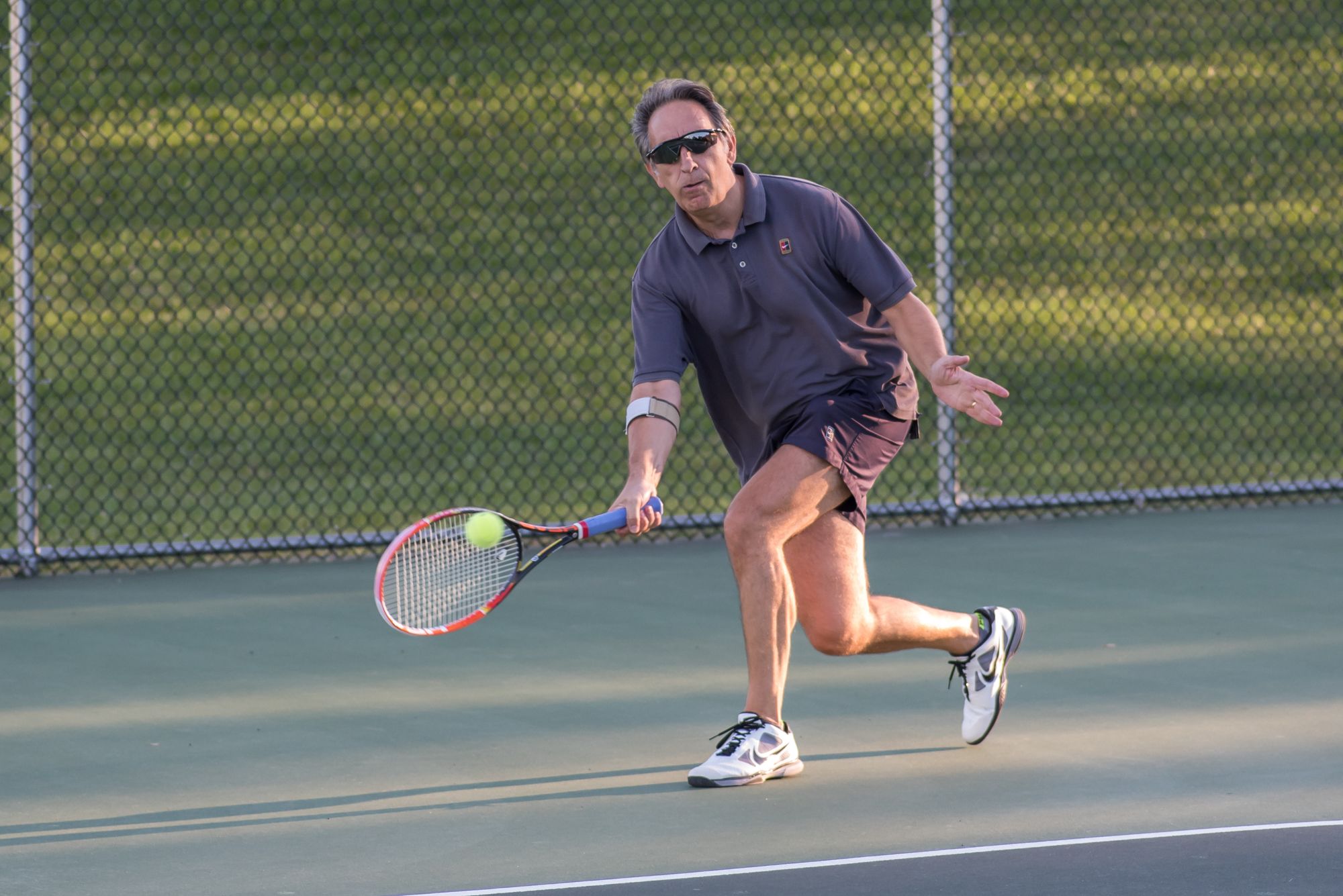
A person can be strong and still be poor at decelerating. They can have good cardiovascular fitness and struggle with lateral movement. They can be flexible but lack control near the end of a range. They can run for two hours and still find a 90-minute tennis match unusually demanding because tennis adds reaction, rotation, repeated changes of direction, balance, and force production under time pressure.
The goal is not to rank one form of training above another. It is to understand what each form develops and what it may leave relatively untrained.
Resistance training is a good example. It is sometimes blamed for making people “tight,” but that is not a defensible general rule. A 2025 systematic review and meta-analysis found that resistance training can improve joint flexibility in healthy adults. The authors also reported substantial variation across studies and limitations in study quality, so the conclusion should remain practical rather than absolute: well-designed strength training can develop usable range of motion, and lifting does not automatically reduce mobility.
The more relevant issue is that many programs use a relatively narrow movement vocabulary. They may emphasize predictable bilateral patterns and controlled repetitions while asking relatively little of rotation, rapid force absorption, lateral movement, reaction, balance, or coordination.
Those qualities matter when a client wants the benefits of strength to carry into sport and daily movement.
This is where “We teach you biomechanics” becomes useful as a methodology rather than a slogan.
At AEON, biomechanics means teaching the body to express physical capacity across a wider range of tasks. That may include learning to produce force from different positions, absorb it under control, rotate through the trunk and hips, move laterally, balance on one leg, accelerate, decelerate, and reorganize the body when the environment changes.
The nervous system is part of that process. Movement is not simply a mechanical output from muscles. It is a continuing interaction among sensory information, motor planning, tissue capacity, attention, and experience. Proprioception helps the body estimate position and movement. Vision and vestibular input contribute to orientation and balance. Repeated practice changes how effectively the nervous system organizes force.
Research on motor variability offers useful context. A 2025 systematic review found that initial movement variability was associated with learning or adaptation in many of the studies examined, but the relationship depended on the task and the way variability was measured. The point is not that more variability is always better. It is that normal human movement is not perfectly identical from repetition to repetition, and exploring more than one effective solution can contribute to learning.
That is a better model than trying to make every repetition look the same.
A tennis player does not receive the same ball twice. A person stepping off a curb does not encounter the same surface every time. Real movement changes with the task. Training should provide enough structure to build capacity while allowing enough variation to develop adaptability.
Recent agility research reinforces the distinction between a rehearsed change of direction and a response to an external cue. A 2026 systematic review and meta-analysis in team-sport players found that training involving perception and action together improved reactive-agility outcomes. The evidence is drawn from athletic populations, so it should not be treated as a universal prescription for every adult. The practical lesson is narrower: moving well is not only about producing force in a planned pattern. It can also require perceiving the environment and organizing an appropriate response.
Connective tissue belongs in the same discussion. Fascia forms part of the connective-tissue structures that surround and link muscles and other tissues. Human studies provide cautious support for force transfer across connected tissues, but the evidence is heterogeneous and its clinical significance is still developing.
Fascia should therefore neither be ignored nor turned into a universal explanation for pain or movement problems.
In practical training, connective-tissue capacity is developed through progressive loading: strength, movement through useful ranges, rotation, multidirectional work, elastic loading when appropriate, and recovery. A foam roller or manual treatment may change how someone feels or moves in the short term, but it does not replace the long-term adaptation created by training.
The same restraint applies to posture and asymmetry. A lower shoulder, pelvic shift, or side-to-side difference may provide useful context, but it is not automatically a diagnosis. A 2025 review of observational research on static posture and low back pain found mixed results and high heterogeneity. Those findings do not establish a simple one-way causal model. Static position should be interpreted alongside function, symptoms, load tolerance, and change over time.
AEON therefore uses a simple SCREEN / TRAIN / REFER model.
SCREEN means observing how someone moves, what they can tolerate, what repeatedly causes difficulty, what has changed, and what their sport or work requires. It includes relevant history, symptoms, recovery, balance, coordination, and training exposure.
TRAIN means improving the capacities that fitness can legitimately change: strength, mobility, conditioning, proprioception, balance, multidirectional movement, coordination, elastic loading, acceleration, deceleration, and recovery.
REFER means recognizing when the explanation may sit outside training. Persistent pain, neurological symptoms, unexplained functional loss, significant red flags, or a plausible medical, dental, vestibular, or other non-training driver may warrant evaluation by an appropriately qualified professional.
The objective is not to make training more complicated. It is to make it more complete.
For an active adult in their 30s, 40s, 50s, or beyond, longevity fitness should not be reduced to preserving muscle mass or maintaining a certain VO2 max. Those qualities matter. So does retaining the ability to react, rotate, balance, stop, accelerate, learn new movement, and participate in sport.
Tennis makes this distinction visible because it exposes the difference between general fitness and movement capability. A player needs cardiovascular capacity, strength, elastic loading, perception, coordination, balance, and repeated multidirectional movement. A gym program can support those qualities, but transfer has to be trained deliberately.
That is what AEON means by biomechanics.
The objective is not perfect posture or correction for its own sake. It is to preserve and expand the physical options available to you, then build enough strength, skill, and conditioning to use them when they matter.
Selected evidence
- The Influence of Resistance Training on Joint Flexibility in Healthy Adults: A Systematic Review, Meta-analysis, and Meta-regressionFavro F, Roma E, Gobbo S, et al. Journal of Strength and Conditioning Research. 2025;39(3):386–397. doi:10.1519/JSC.0000000000005000.
- Relationship between initial motor variability and learning and adaptive ability: A systematic reviewLópez-Fernández M, Sabido R, Caballero C, Moreno FJ. Neuroscience. 2025;565:301–311. doi:10.1016/j.neuroscience.2024.10.052.
- Optimizing Agility Training in Team Sport Players: The Role of Perception-Action CouplingZhao Z, Liu Y, Xu K. Journal of Sports Science and Medicine. 2026;25:84–111. doi:10.52082/jssm.2026.84.
- Evidence of in-vivo myofascial force transfer in humans: A systematic scoping reviewAjimsha MS, Shenoy PD, Surendran PJ, et al. Journal of Bodywork and Movement Therapies. 2022;32:183–195. doi:10.1016/j.jbmt.2022.05.006.
- Postural asymmetry in low back pain: A systematic review and meta-analysis of observational studiesSugavanam T, Sannasi R, Anand PA, Javia PA. Disability and Rehabilitation. 2025;47(7):1659–1676. doi:10.1080/09638288.2024.2385070.