In this article
A single number is appealing. It can make a complicated subject feel measurable, and biological-age reports often arrive with exactly that promise: one result that appears to say whether you are aging faster or slower than the calendar suggests.
The result may be informative. It is not a complete description of fitness, and it is not a training plan.
Someone can have strong aerobic fitness and limited balance. Another person can be strong in the gym but poorly prepared for repeated accelerations on a tennis court. A third may test well after a rested week yet struggle to recover when work, travel, and training accumulate.
Long-term physical capability is not one trait. Useful assessment respects that complexity without turning it into an exhausting battery of tests.
First ask what the score was built to estimate
“Biological age” is an umbrella term, not a single standardized measurement. Different models use different inputs and are trained against different outcomes. That means two reports can give different answers without either one necessarily being calculated incorrectly.
DNAm PhenoAge provides a useful example. The published research first created a phenotypic-age measure from nine clinical biomarkers plus chronological age, selected for their relationship with mortality risk. Researchers then developed a DNA-methylation measure designed to estimate that phenotypic age and tested its association with several health outcomes.
That is sophisticated population research. But the number reflects the model that produced it: its inputs, training data, assumptions, and intended outcomes. It does not directly test how much force you can produce, how well you tolerate a long hike, whether you can decelerate safely, or how your shoulder responds to serving.
The right response is neither to dismiss every biological-age score nor to let one score dominate the conversation. Ask what was measured, what the model was validated to estimate, and whether the result changes a useful decision.
Physical capability is plural
Research has repeatedly linked physical-performance measures with important health outcomes. In a large retrospective cohort of adults referred for treadmill testing, higher cardiorespiratory fitness was associated with lower long-term mortality. The international PURE study found that grip strength was associated with cardiovascular and all-cause mortality. A pooled analysis of nine cohorts found that gait speed was associated with survival among community-dwelling adults age 65 and older.
These are associations, not guarantees for an individual. They also do not make treadmill capacity, grip, or gait speed interchangeable. Each measure captures a different part of physical function and is influenced by context.
That distinction matters in practice. An active adult may have excellent grip strength and insufficient conditioning for a walking holiday. A recreational athlete may retain speed but lack the strength or tissue capacity to tolerate a sudden increase in court time. A person returning after illness may need a clinical evaluation before performance testing is appropriate.
No single test needs to carry the whole story. A small set of well-chosen measures can create a more useful capability profile.
Measure what you intend to train
Assessment should connect a person’s goals with decisions about training. At AEON, that starts with the activity: tennis, hiking, travel, demanding work, getting comfortably to the floor, or returning to regular exercise. The demands of the task help determine which measures are worth collecting.
A practical profile might include the following, selected and adapted to the individual rather than treated as a compulsory checklist:
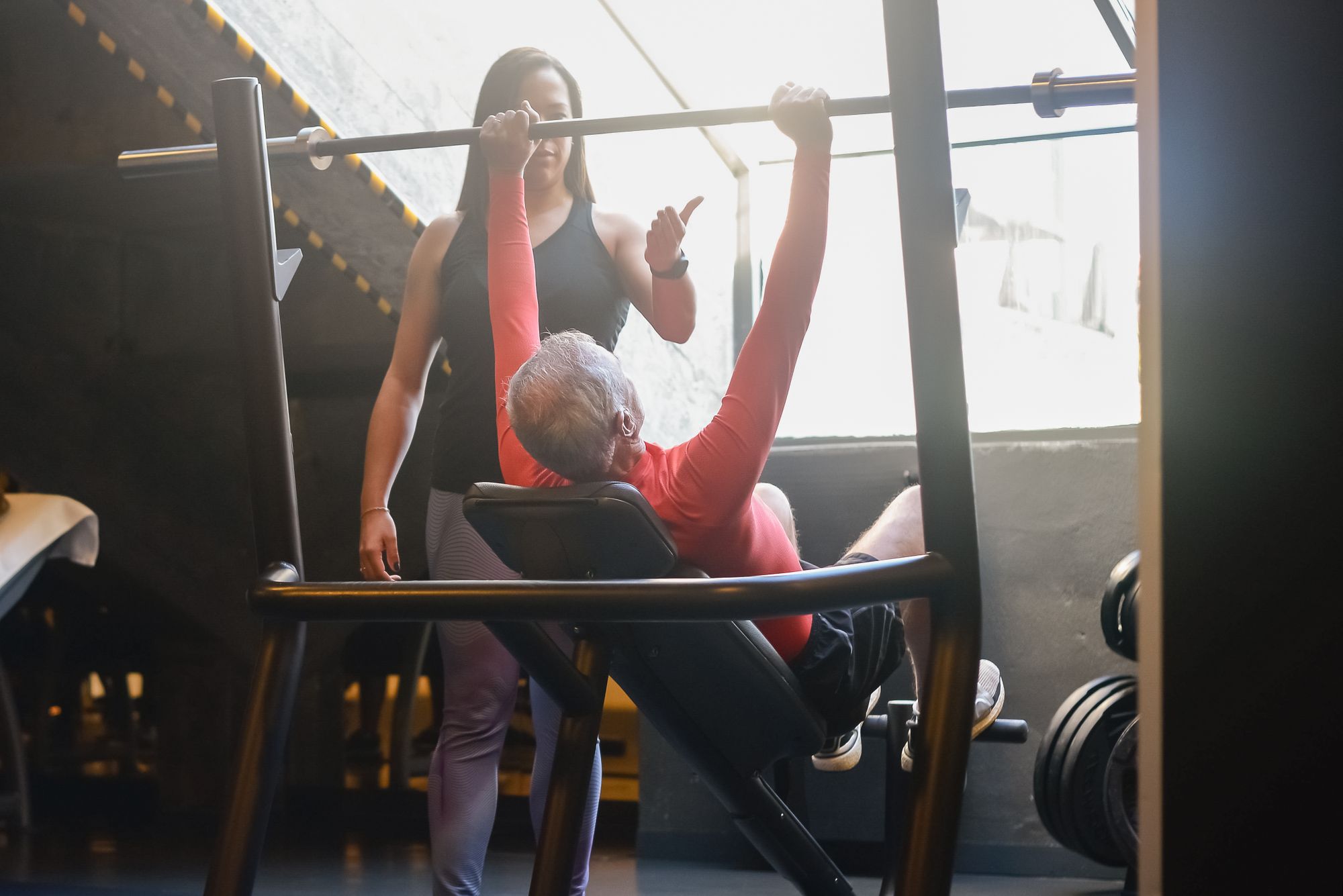
Strength and load tolerance. A repeatable lift, carry, push, or lower-body task can show what force a person can produce and tolerate with appropriate technique.
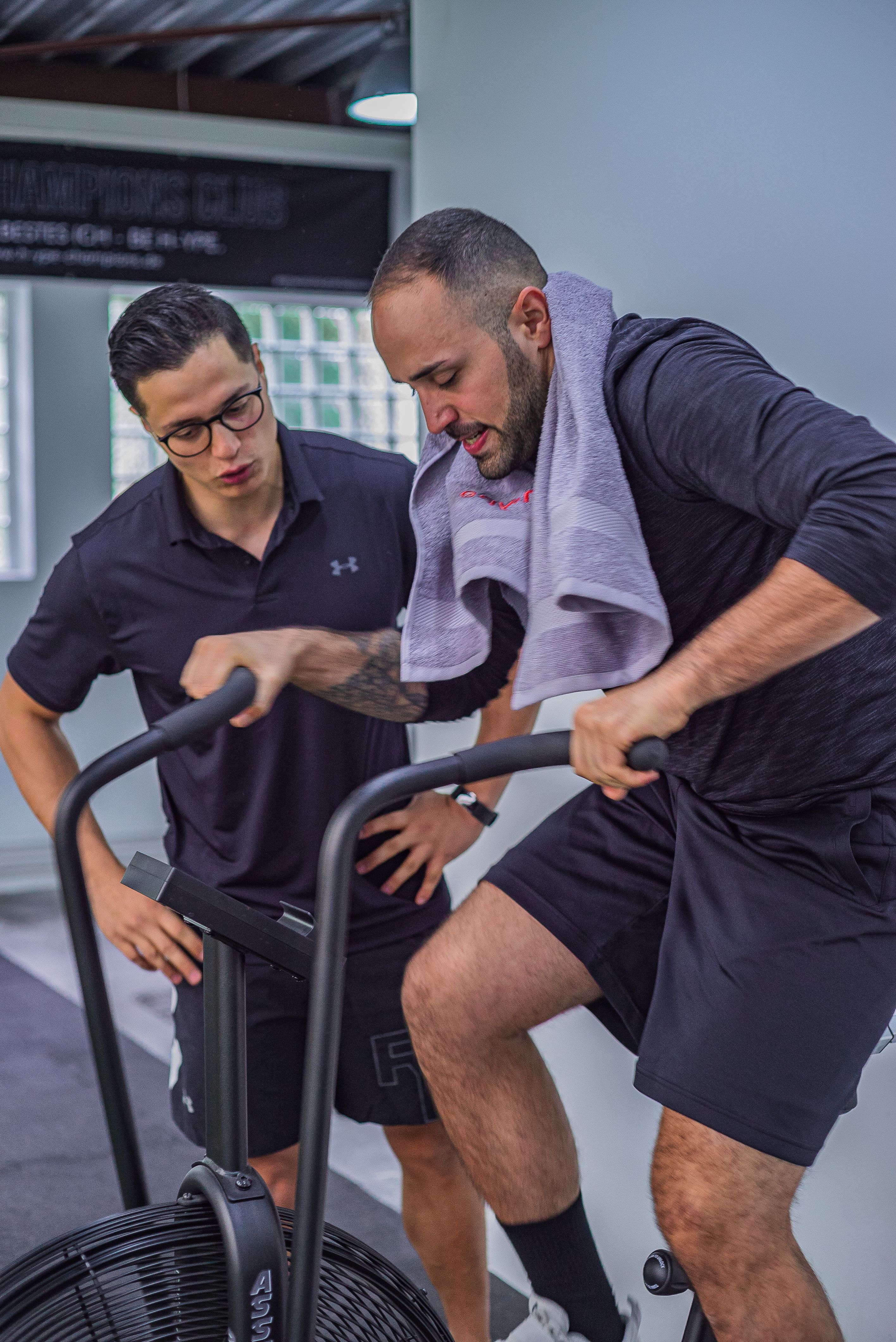
Conditioning. A submaximal bike, treadmill, rower, walk, or field test can establish a useful work rate without requiring a maximal test in every case.
Power and speed. When appropriate, a chair-rise task, jump variation, medicine-ball throw, or short acceleration can reveal whether strength is available quickly.
Balance and movement skill. Relevant tasks can show how a person controls position, changes direction, or uses available range of motion. The objective is not to diagnose ordinary asymmetry.
Training tolerance and recovery. Symptoms, fatigue, consistency, and response over the following day or week add context that a best effort cannot provide.
The measure should be repeatable enough to compare over time and specific enough to influence programming. More data is not automatically better. If a result will not change what you do, it may not deserve a place in the assessment.
Use trends without manufacturing precision
A test result can move because fitness changed, but it can also move because the protocol, equipment, environment, motivation, sleep, pain, or recent workload changed. Consistency makes comparisons more credible.
This is one reason trends are often more useful than a dramatic before-and-after claim. Repeating a small number of relevant measures under similar conditions can show whether a program is moving the capacities it was designed to develop.
The interpretation still belongs in context. A small improvement on a bike test may be meaningful if a client also tolerates longer days of travel and recovers more predictably. A better gym number may matter less if it does not transfer to the activity the person values.
Assessment should clarify training, not turn normal human variation into a defect or create anxiety around an allegedly perfect age.
SCREEN, TRAIN, and REFER
AEON’s SCREEN / TRAIN / REFER framework keeps capability assessment within fitness scope.
SCREEN: Clarify goals, training history, current activity, symptoms, medical considerations, and the demands of the chosen activity. Observe performance without pretending that a movement test diagnoses disease or structural pathology.
TRAIN: Develop modifiable capacity through progressive strength, conditioning, mobility, balance, coordination, power, and recovery work. The mix should reflect the person rather than a universal longevity formula.
REFER: Direct medical symptoms, unexplained functional decline, abnormal clinical results, or questions about diagnosis and treatment to an appropriately qualified clinician. A fitness professional can help connect clinical guidance with training, but should not reinterpret laboratory or epigenetic results as a medical diagnosis.
This division of responsibility allows measurement to support action without exceeding what the evidence or professional role can justify.
Choose minimum effective complexity
A systems view recognizes that strength, connective tissue, joints, nervous-system control, aerobic capacity, sleep, stress, work demands, and training history interact. Minimum Effective Complexity asks a second question: how much of that complexity does the person need in the program right now?
For one client, two strength measures, a submaximal conditioning test, and a short review of balance and movement may be enough. For a tennis player, we may add lateral movement, acceleration, and tolerance for repeated efforts. For someone referred by a clinician, the assessment may need narrower boundaries and explicit coordination.
The goal is not to prove that one number makes you younger. It is to build the capabilities that make life, work, and sport more available—and to use measurements that help guide the next useful step.
Selected research
- An epigenetic biomarker of aging for lifespan and healthspanLevine et al., Aging. April 18, 2018.
- Association of Cardiorespiratory Fitness With Long-term Mortality Among Adults Undergoing Exercise Treadmill TestingMandsager et al., JAMA Network Open. October 5, 2018.
- Prognostic value of grip strength: findings from the Prospective Urban Rural Epidemiology (PURE) studyLeong et al., The Lancet. July 18, 2015.
- Gait speed and survival in older adultsStudenski et al., JAMA. January 5, 2011.