In this article
For an active adult, hydration sounds like one of the simplest parts of fitness: drink enough water.
In practice, it is considerably more individual.
A 45-minute strength session in an air-conditioned gym, a two-hour tennis match on a warm hard court, a long cycling session, a soccer game and three hours of recreational pickleball do not create the same demands. Neither do two people performing exactly the same activity.
One athlete may lose relatively little fluid. Another may sweat more than a liter per hour. One may lose comparatively little sodium. Another finishes training with visible salt on a shirt, hat or skin. Add differences in temperature, humidity, fitness, body size, diet, acclimatization, medications and training history, and a universal hydration prescription becomes difficult to defend.
The more useful principle is this:
Hydration should match the physiological load.
That means understanding water, sodium and other electrolytes, but also understanding what hydration cannot explain.
A tight calf is not proof of sodium deficiency. A muscle cramp does not automatically mean dehydration. Drinking more water is not always safer. And an electrolyte beverage is not necessarily better simply because it contains more minerals.
For adults who train regularly, hydration is best considered one component of a larger physical system.
Sweat loss can vary enormously
Sweating is an essential cooling mechanism. As sweat evaporates from the skin, the body loses both water and electrolytes, primarily sodium and chloride, with smaller amounts of potassium, calcium and magnesium.
The amount varies substantially.
A large analysis of more than 1,300 athletes found average whole-body sweat rates of approximately 1.28 liters per hour in endurance athletes, 0.94 L/hour in soccer players and 0.95 L/hour in basketball players. Those averages conceal substantial individual variation.
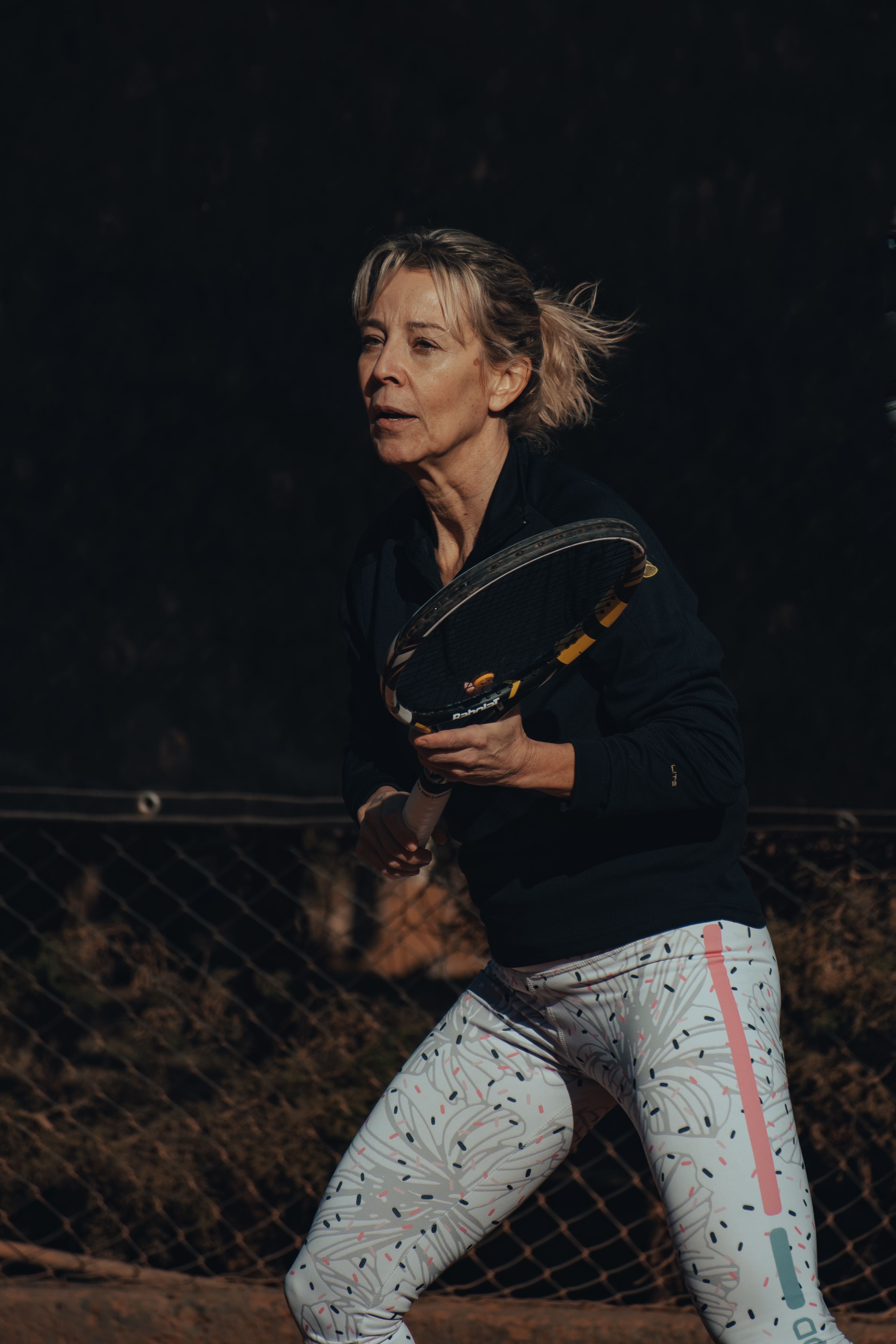
Tennis illustrates the problem particularly well.
Research conducted during competitive tennis has reported average sweat rates around 1.0 to 1.1 liters per hour in some cohorts, while other work in hot conditions has documented considerably higher rates. Individual measurements can vary from well below one liter per hour to more than two liters per hour depending on the player and conditions.
That difference is enormous.
At 0.5 L/hour, a two-hour session represents roughly one liter of sweat.
At 1.5 L/hour, the same session represents approximately three liters.
The sodium implications are equally variable because sweat sodium concentration differs substantially between individuals.
This is why sophisticated hydration does not begin with a product.
It begins with the person.
A simple way to estimate your sweat rate
For active adults who routinely exercise for an hour or longer, occasional body-weight measurements can provide useful information.
Weigh yourself before exercise, ideally in minimal dry clothing. Record how much fluid you drink during the session. Weigh yourself again afterward under similar conditions.
Approximately one kilogram, or 2.2 pounds, of body-weight reduction corresponds to roughly one liter of net fluid loss.
A practical estimate is:
Sweat loss (liters) ≈ pre-exercise mass (kg) − post-exercise mass (kg) + fluid consumed (liters) − urine produced (liters)
Divide that amount by exercise duration to estimate hourly sweat rate.
It does not need to become a daily laboratory experiment. Testing several representative sessions can reveal useful patterns: a cool gym day, a hot tennis session, a long ride, or another activity that produces substantial sweating.
The objective is not perfect replacement.
It is to understand your approximate range.
Sports-medicine guidance generally advises avoiding both excessive dehydration and weight gain from overdrinking during exercise. For performance-oriented training, keeping exercise-related body-mass loss to roughly 2 percent or less is a widely used guideline, although individual tolerance and circumstances vary.
More water is not always better
The old hydration message was often simply to drink as much water as possible.
That advice can create its own problem.
During prolonged exercise, particularly endurance events, consuming fluid faster than it is lost can dilute blood sodium. Severe exercise-associated hyponatremia is uncommon, but it can be dangerous.
The important point is that hyponatremia is primarily a problem of relative excess water, often combined with continued antidiuretic hormone activity during exercise. Significant sodium losses can contribute in some individuals, but taking sodium does not make unlimited water consumption safe.
A useful practical rule is therefore:
Replace losses rather than trying to get ahead of them indefinitely.
If an adequately hydrated athlete finishes a long session weighing more than before it started, that can be a warning that fluid intake exceeded losses.
Sodium matters, but cramping is more complicated
Sodium performs important physiological functions involving fluid balance, nerve impulses and muscle contraction.
During prolonged sweating, sodium losses can become meaningful.
That does not mean every calf cramp is a sodium problem.
Modern research on exercise-associated muscle cramps increasingly points toward altered neuromuscular control associated with fatigue. As a muscle becomes fatigued, the balance between excitatory and inhibitory signals involved in muscle contraction can change, increasing susceptibility to involuntary contraction.
This explains an observation that the simple dehydration theory struggles with: cramps often affect the muscles doing the most work rather than appearing uniformly throughout the body.
A tennis player's calf or hamstring may cramp late in a match while the muscles of the upper body do not.
That pattern is consistent with localized muscular fatigue.
Hydration and electrolyte status can still matter. A person exercising for several hours in heat, losing large quantities of salty sweat, may have a different cramping profile than someone who repeatedly cramps during short sessions in cool conditions.
In tennis specifically, current reviews suggest neuromuscular fatigue probably explains many cases of localized exercise-associated cramping, while fluid and electrolyte losses may become more relevant in recurrent, systemic or prolonged heat-related cases.
The correct conclusion is therefore not:
Cramp = low sodium.
It is:
Cramping is a signal worth interpreting in context.
Training load, fatigue, previous injury, conditioning, heat exposure, fluid balance, sodium loss, sleep, recovery and fueling may all deserve consideration.
Tightness is not the same thing as a cramp
This distinction is also important.
People frequently describe calves as tight, heavy, full or stiff without experiencing an actual involuntary muscle cramp.
Those sensations can arise from repetitive loading, accumulated fatigue, previous injury, altered training volume, increased running or jumping exposure, footwear changes, court surface, recovery status and many other factors.
A recreational tennis player who suddenly moves from two hours of play per week to several hours of daily coaching or playing has dramatically changed the mechanical exposure of the gastrocnemius, soleus and Achilles complex.
Hundreds of small split steps, pushes, pivots, accelerations and decelerations accumulate.
Hydration may influence how that person feels and performs, but it cannot replace appropriate tissue capacity.
This is an important AEON distinction:
Hydration supports the system. It does not substitute for conditioning.
What about creatine?
Creatine is sometimes blamed for lower-leg tightness because it increases water associated with muscle tissue.
The evidence does not support the broader claim that normal creatine supplementation causes dehydration or increases exercise-associated cramping.
Creatine monohydrate increases muscle creatine stores and commonly produces a modest increase in body mass, particularly during the first stages of supplementation. Some of this change reflects increased body water.
That is not the same thing as pathologic dehydration of the extracellular space.
Controlled studies and major reviews have not demonstrated an increased incidence of dehydration or muscle cramping among healthy athletes taking typical creatine doses.
A frequently used maintenance intake is approximately 3 to 5 grams daily after muscle stores are saturated. Smaller amounts can also increase muscle creatine over time.
Creatine therefore belongs in a separate conversation about performance, strength, muscle preservation and aging. It should not be used as the default explanation for an athlete's calf tightness.
How much sodium?
There is no single appropriate number for everyone.
Sports-medicine guidance commonly cites approximately 500 to 700 milligrams of sodium per liter as a practical starting range during prolonged exercise, particularly when sweating is substantial. Individual requirements can be higher or lower depending on sweat rate, sweat sodium concentration, environment, diet and duration.
This is where the familiar teaspoon of salt requires context.
A teaspoon of ordinary table salt contains roughly 2,300 milligrams of sodium.
Putting an entire teaspoon into one liter of water would therefore create a beverage containing roughly 2.3 grams of sodium per liter, several times a typical starting concentration for general exercise hydration.
That does not mean a teaspoon of salt distributed across an entire day is inherently excessive for someone losing large amounts of sweat. It means it should not be converted into a universal prescription without knowing the person's sweat volume, diet, health status and circumstances.
For many active adults, sodium intake across meals plus a moderate amount in exercise fluids is simpler and more practical.
People with hypertension, kidney disease, heart failure or medical conditions or medications affecting sodium and potassium balance should discuss aggressive electrolyte strategies with an appropriate clinician.
Is Gatorade bad?
No.
But it is also not the automatic answer to hydration.
Standard Gatorade Thirst Quencher supplies sodium and carbohydrate. Check the label on the specific flavor and bottle size, because formulations and serving sizes vary.
That formulation has a purpose.
A carbohydrate-electrolyte sports drink can provide fuel as well as fluid and sodium. During prolonged, moderate-to-high-intensity exercise, that can be useful.
A two-hour competitive tennis session is different from walking on a treadmill for 40 minutes.
In the first case, fluid, sodium and carbohydrate may all be useful.
In the second, consuming additional sugar simply to obtain sodium may provide calories the person neither needs nor particularly wants.
Standard Gatorade's sodium concentration is also relatively moderate. For a person losing large quantities of high-sodium sweat during hours of exercise, it may not replace sodium at the rate required.
So the issue is not that Gatorade is an inherently poor product.
The problem is using one product for every physiological situation.
Commercial sports drinks can be useful when their carbohydrate and electrolyte profile matches the activity. Lower-sugar electrolyte formulations may make more sense when hydration rather than fueling is the objective.
And ordinary food can often do much of the work.
Where should electrolytes come from?
For most active adults, the foundation should remain normal food.
Sodium can come from salted meals, soups and broths, cheese, olives and appropriately salted whole-food meals. During heavy exercise, sodium chloride added in measured amounts to water can also be an inexpensive hydration tool.
Potassium is abundant in potatoes, beans, lentils, tomatoes, leafy vegetables, bananas, dried fruit, yogurt, milk, meat and fish.
Magnesium is available through nuts, seeds, legumes, whole grains and leafy vegetables. Magnesium deficiency can produce neuromuscular symptoms, but taking magnesium indiscriminately is not an evidence-based treatment for ordinary exercise cramping in someone who is not deficient.
Calcium can be obtained through dairy products, fortified alternatives, certain leafy vegetables, tofu and fish eaten with bones.
Milk and yogurt can be useful after exercise because they provide fluid, electrolytes, carbohydrate and protein together. Controlled research has shown low-fat milk can be an effective post-exercise rehydration beverage, although individual tolerance and nutritional goals still matter.
The broader point is that an “electrolyte strategy” does not have to mean purchasing an electrolyte product.
How the hydration problem changes by sport
The average active adult may participate in several activities over a week, and their physiological demands differ.
Tennis
Singles tennis combines repeated acceleration, deceleration, rotation, elastic loading and relatively long exposure to outdoor heat.
Sweat rates around one liter per hour are common in published cohorts, but the variability is substantial and hot-weather values can be considerably higher.
Tennis also places repeated loading on the calves and Achilles while imposing significant rotational and overhead stress on the shoulder.
Hydration matters, but so do calf capacity, soleus strength, ankle function, elastic loading tolerance and rotator-cuff conditioning.
Pickleball
Pickleball may create a lower average cardiovascular load than singles tennis, but describing it as mechanically easy can be misleading.
Short accelerations, lunges, abrupt stops and direction changes can place substantial demand on the lower leg.
This becomes particularly relevant because many participants begin or return to racquet sports later in adulthood.
A case series published online in 2024 and in a 2026 issue of Foot & Ankle Specialist identified 43 pickleball-related Achilles ruptures within a large multistate orthopedic database and found the affected pickleball group was older than the broader Achilles-injury cohort. The study cannot establish population-level risk, but it supports taking lower-leg preparation seriously in older recreational players.
Padel
Padel generally creates an intermittent racquet-sport load with repeated accelerations, stops, rotations, volleys, overhead movements and directional changes.
The court is smaller than a tennis court, but environmental heat, match duration, intensity and individual sweat rate remain decisive for hydration.
Running
Running produces continuous repetitive loading and can generate substantial sweat losses, particularly in warm conditions.
Endurance athletes in large datasets average among the higher sweat rates studied.
Unlike racquet sports, the movement is comparatively predictable, but duration may be substantially longer.
For long-distance runners, excessive drinking is also particularly relevant because prolonged events are one of the classic settings for exercise-associated hyponatremia.
Cycling
Cycling can produce significant fluid losses without the athlete fully recognizing them because airflow across the skin can make sweat less noticeable.
Long duration creates an additional challenge.
A recreational cyclist spending three or four hours outside may accumulate a considerable fluid and sodium deficit even if the hourly intensity seems moderate.
Soccer
Soccer combines sustained aerobic activity with repeated high-intensity accelerations, sprinting, deceleration and direction change.
Large athlete datasets have reported average sweat rates around 0.9 to 1.0 liters per hour in soccer, with substantial person-to-person variability.
Access to fluids during play is also more limited than in tennis or cycling, making pre-exercise hydration and planned breaks more important.
Strength training and the gym
Most ordinary resistance-training sessions do not require sophisticated electrolyte supplementation.
For a 45- to 60-minute strength session in comfortable indoor conditions, arriving hydrated, drinking according to thirst and eating a normal diet will be sufficient for many people.
High-volume circuits, long conditioning sessions, hot environments, multiple workouts per day and unusually high sweat rates change that calculation.
A practical AEON hydration framework
The goal is not to turn hydration into another full-time optimization project.
Use the minimum effective complexity.
For shorter, moderate sessions, begin hydrated, drink according to thirst and obtain electrolytes primarily through normal meals.
For prolonged sessions, high heat or heavy sweating, estimate your sweat rate and consider sodium-containing fluid. Roughly 500 to 700 mg sodium per liter is a reasonable evidence-based starting range for many prolonged-exercise situations, but individual requirements vary.
For long or demanding sessions where energy is also required, carbohydrate-electrolyte drinks become more useful.
After substantial sweat loss, replace fluid gradually and eat. Sodium-containing food helps retain ingested fluid, while carbohydrate and protein address other components of recovery. When rapid recovery is necessary between sessions, replacing somewhat more than the measured fluid deficit can be appropriate.
Do not routinely finish prolonged exercise heavier than you started.
And do not interpret every tight muscle as an electrolyte deficiency.
The Achilles deserves special attention
Hydration is only one part of the larger longevity-performance problem.
For active adults, the Achilles tendon deserves particular attention because the consequences of rupture are substantial and the epidemiology is notable.
A 2026 systematic review and meta-analysis of population-based data estimated a pooled global Achilles-tendon rupture incidence of approximately 15.7 cases per 100,000 person-years. Incidence has risen over time, and about 68 percent of ruptures in the included studies were sport related. The greatest burden was observed among physically active middle-aged men.
Recent U.S. data also implicate recreational ball and racquet sports, including tennis and pickleball.
The answer is not to avoid these sports.
Quite the opposite.
Tennis, pickleball, padel, running, cycling and recreational team sports can all be valuable components of lifelong physical activity.
The answer is to prepare the body for what the sport asks it to do.
Achilles tendons adapt to mechanical loading. A 2026 systematic review and network meta-analysis of healthy adults found progressive higher-dose loading, including plantar-flexion and plyometric approaches, was more consistently associated with favorable tendon adaptations than stretching-dominant programs. The authors also emphasized heterogeneity and uncertainty, so these findings should not be interpreted as proof that any single protocol prevents rupture.
That will be the subject of the next AEON article: how to build lower-leg and Achilles capacity for adults who want to keep running, playing tennis, pickleball, padel and field sports without treating injury prevention as an afterthought.
Because longevity fitness is not simply about exercising more.
It is about maintaining the physical capacity to continue doing the things you want to do.
Hydration supports that capacity.
Training builds it.
Sources and further reading
- McDermott BP, Anderson SA, Armstrong LE, et al. National Athletic Trainers’ Association Position Statement: Fluid Replacement for the Physically Active. Journal of Athletic Training. 2017;52(9):877-895.Peer-reviewed research
- Barnes KA, Anderson ML, Stofan JR, et al. Normative data for sweating rate, sweat sodium concentration, and sweat sodium loss in athletes: an update and analysis by sport. Journal of Sports Sciences. 2019;37(20):2356-2366.Peer-reviewed research
- Troyer W, Render A, Jayanthi N. Exercise-Associated Muscle Cramps in the Tennis Player. Current Reviews in Musculoskeletal Medicine. 2020;13(5):612-621.Peer-reviewed research
- Hew-Butler T, Loi V, Pani A, Rosner MH. Exercise-Associated Hyponatremia: 2017 Update. Frontiers in Medicine. 2017;4:21.Peer-reviewed research
- Kreider RB, Kalman DS, Antonio J, et al. International Society of Sports Nutrition position stand: safety and efficacy of creatine supplementation in exercise, sport, and medicine. Journal of the International Society of Sports Nutrition. 2017;14:18.Peer-reviewed research
- Shirreffs SM, Watson P, Maughan RJ. Milk as an effective post-exercise rehydration drink. British Journal of Nutrition. 2007;98(1):173-180.Peer-reviewed research
- Kotsifaki R, Malliaras P, Byron C, Marques J, Korakakis V, et al. Incidence, Temporal Trends, and Surgical Shift of Achilles Tendon Rupture: A Systematic Review and Meta-analysis. Sports Medicine. 2026;56:1467-1487.Peer-reviewed research
- Fu B, Qian Y, Wang Y, Fang J, Gu Y, Zhang X. The effect of exercise training modalities on the morphological and mechanical properties of the Achilles tendon: a systematic review and network meta-analysis. Frontiers in Sports and Active Living. 2026;8:1782503.Peer-reviewed research
- McCahon JAS, Miller M, Riebesell S, Pedowitz DI, Parekh SG, Daniel JN. Pickleball and the Rising Incidence of Achilles Tendon Injuries in the Elderly. Foot & Ankle Specialist. 2026;19(2):206-210.Peer-reviewed research