In this article
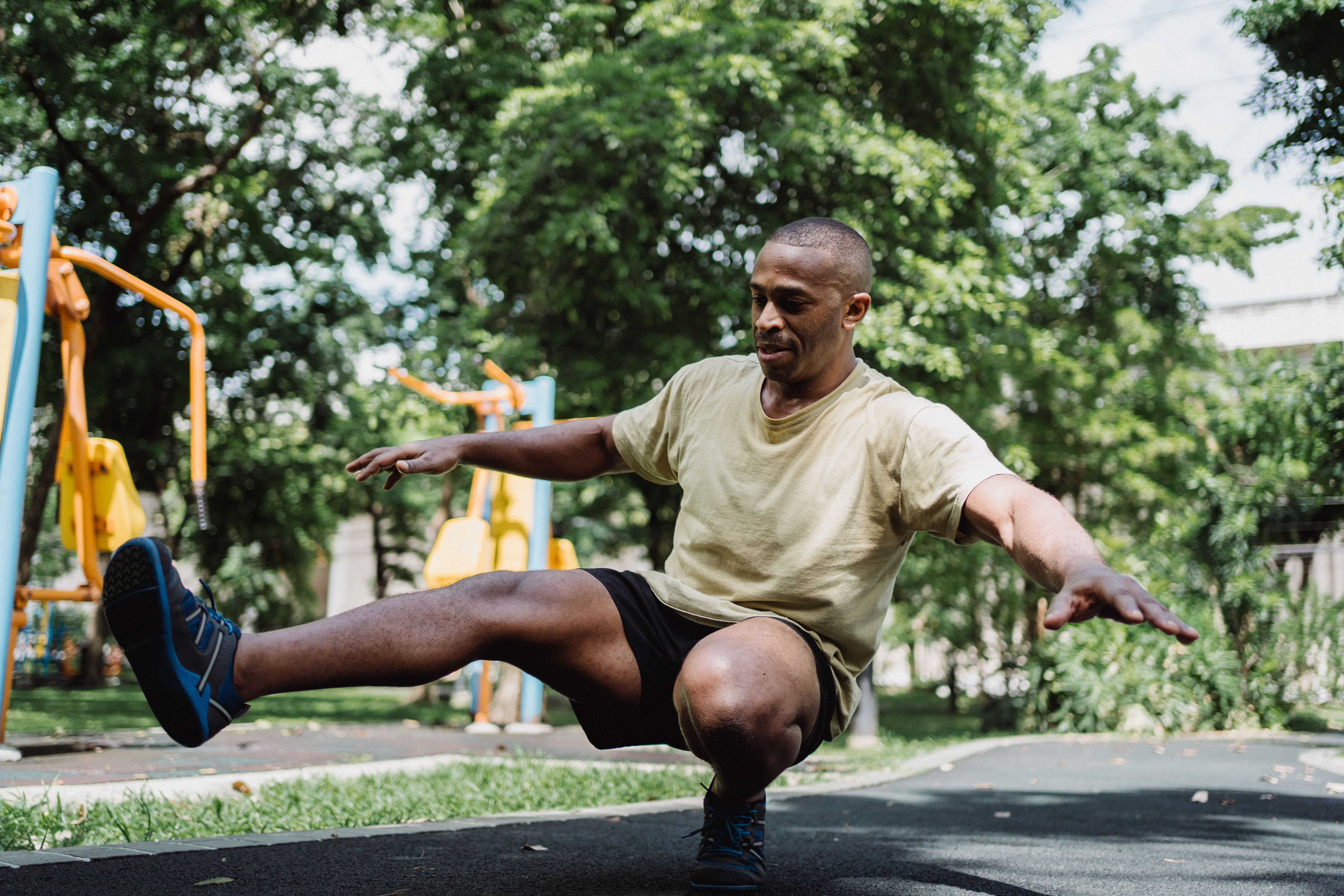
Balance is often treated as a test: stand on one leg, hold the position, and see how long you last. That can be useful information, but it is not a complete description of the quality.
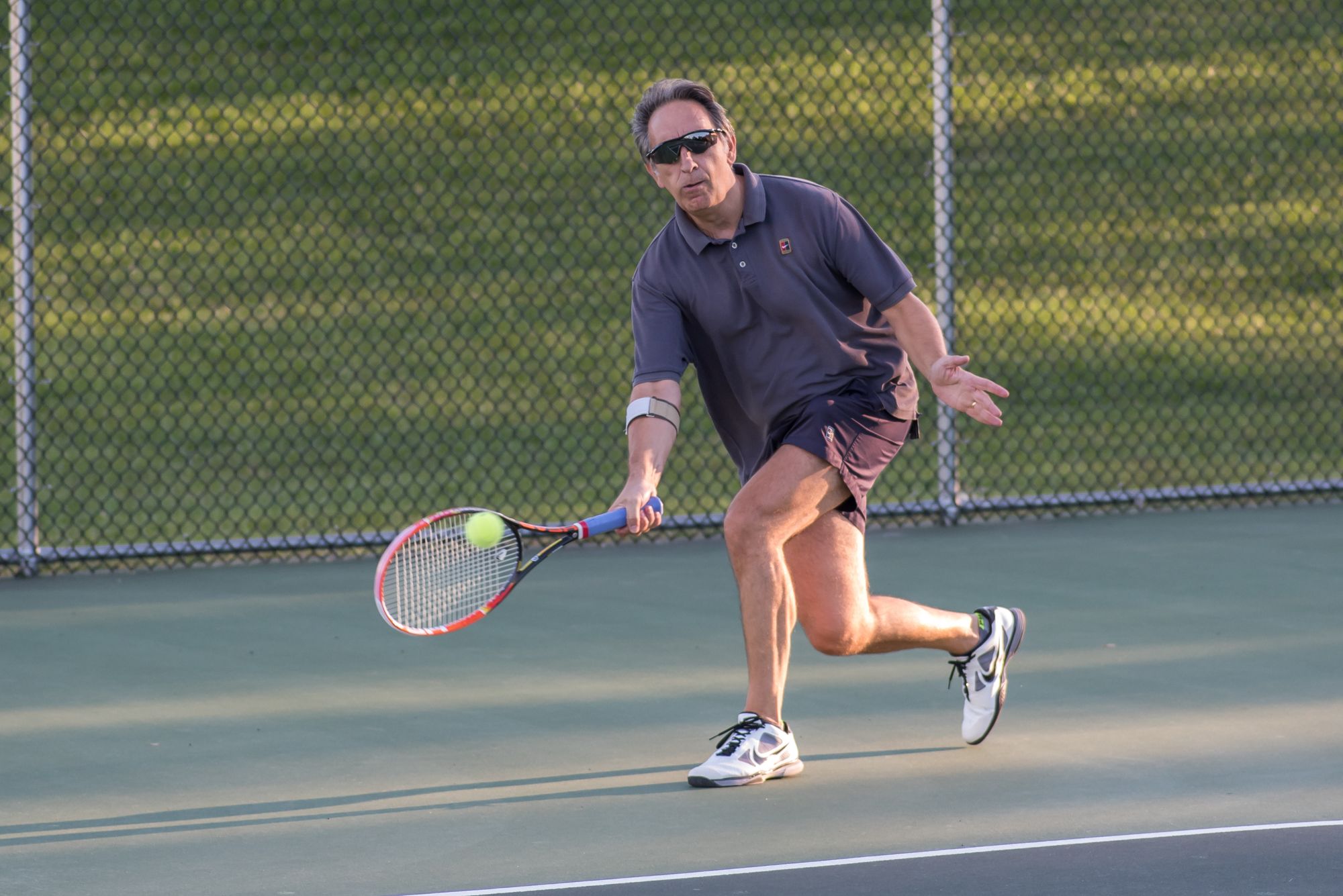
Real balance changes with the task. Walking over uneven ground, reaching into a high cabinet, carrying a suitcase, recovering after a misstep, and moving toward a short tennis ball place different demands on the body. Each requires sensory information, muscular force, joint motion, coordination, and an appropriate response within the available time.
This is why a person can become very good at one balance drill without becoming equally capable in every situation. The objective of training is not to master one pose. It is to build enough capacity and enough movement options for the situations that matter.
The balance you practice is the balance that improves
Balance training works, but transfer is not automatic. A systematic review and meta-analysis of randomized trials in healthy people found strong task specificity: improvement was substantially larger in the balance tasks that participants practiced than in untrained balance tasks. In other words, practice produced skill, but the skill did not simply spread to every other balance challenge.
That finding should change how a program is designed. Holding a single-leg position may improve that position. It does not necessarily prepare someone to recover from an unexpected trip, control a lateral step, decelerate from a run, or reorganize the body while tracking a tennis ball.
This does not make simple drills ineffective. It makes them an entry point. A familiar, supported task can help someone learn control and give a coach a repeatable way to observe change. The mistake is allowing the entry point to become the whole program.
Balance has several practical forms
Research commonly separates balance into related demands rather than one universal ability. The labels vary, but four practical categories are useful for training.
Steady control. Maintaining a position while the base of support remains relatively stable, such as standing on one leg or holding a split stance.
Control during movement. Managing the body while walking, stepping, changing levels, rotating, reaching, or moving from one base of support to another.
Anticipatory control. Organizing the body before a voluntary action, such as stepping onto a curb, reaching away from the body, or preparing to change direction.
Reactive control. Responding after something disrupts the planned position, including a slip, trip, bump, unexpected surface, or sudden change in the environment.
A 2015 meta-analysis involving healthy older adults found that balance training could improve measures across static and dynamic steady-state, proactive, and reactive categories. The result supports training balance, but it also reinforces the need to decide which category the program is actually addressing.
Strength supports balance, but it does not replace practice
Strength matters because the body needs force to control position, arrest movement, and create a recovery step. The feet, calves, hips, trunk, and upper body may all contribute depending on the task. Yet improving force capacity and practicing balance are not identical training problems.
A 2025 randomized trial assigned 65 community-dwelling adults ages 60 to 74 to resistance training, combined resistance and balance training, or a non-exercise control group for 24 weeks. Both exercise groups improved several physical-function measures. The combined group showed an additional improvement in dynamic balance compared with resistance training alone. This was one modest study in older adults, not proof that one protocol fits every person, but it supports a practical conclusion: general strength and specific balance work can complement one another.
The same distinction applies to mobility. More range of motion may create an option, but the person still has to control that range under the conditions they face. Balance training is where force, range, sensory information, and timing have to work together.
Progress the problem, not the novelty
Balance training does not require a collection of unstable devices. Difficulty can be adjusted through the stance, direction, speed, reach, load, visual environment, decision, or amount of support available. The best change is the one that makes the task meaningfully harder while preserving enough control to practice it well.
For one person, removing a fingertip from a stable support may be a useful progression. For another, the relevant task may be a controlled step-down, a loaded split stance with rotation, a lateral step and stop, or a change of direction in response to a visual cue. A tennis player may need to organize the body while reading the ball. A traveler may care more about steps, luggage, and unfamiliar surfaces.
Reactive balance deserves particular care. A network meta-analysis of randomized trials in older adults found task-specific reactive balance exercise to be the most effective category for improving reactive balance among the interventions compared. That does not mean people should deliberately create unsafe slips or surprises at home. Appropriate reactive work requires a controlled setting, a suitable starting level, and a clear safety plan.
A practical training sequence
The following sequence is a coaching framework, not a universal protocol. AEON uses Minimum Effective Complexity: select the smallest useful challenge, then progress when the person can control it consistently.
Establish the base. Build sufficient lower-body and trunk strength, usable joint motion, and confidence in ordinary standing, stepping, and getting up and down.
Reduce support deliberately. Use narrower stances, split stances, or single-leg positions when they fit the person. Keep a stable support within reach when needed.
Add movement. Reach, rotate, change level, carry a manageable load, or move between positions. The task should resemble a capability the person wants to retain.
Practice force absorption. Use controlled step-downs, stops, lateral movements, or landing progressions appropriate to the person. This connects balance to deceleration rather than treating it as stillness.
Add decisions or reactions selectively. When appropriate and safely supervised, introduce a cue, direction change, ball task, or controlled perturbation. Increase one demand at a time so the response remains observable.
SCREEN / TRAIN / REFER
SCREEN: Observe the tasks that matter, the conditions that change performance, training history, confidence, symptoms, recent falls or near-falls, vision, footwear, fatigue, and how much support is required. A single-leg time can add context, but it should not become a diagnosis.
TRAIN: Develop the relevant capacities through progressive strength, stepping, movement, deceleration, coordination, and balance tasks that reflect the person’s goals. The World Health Organization recommends that adults 65 and older include multicomponent activity emphasizing functional balance and strength. Training these qualities before 65 can also support sport and everyday capability, although the WHO recommendation is specifically written for older adults.
REFER: New dizziness, fainting, unexplained changes in balance, neurological symptoms, sudden weakness, significant vision changes, repeated falls, or persistent symptoms require assessment by an appropriately qualified health professional. Those are not problems to solve by making a balance drill harder.
Balance is trainable, but it should be treated as a set of capabilities rather than a party trick. The useful question is not only whether you can stand on one leg. It is whether you can control the positions, movements, and recoveries your life and sport require.
Selected evidence and guidance
- WHO guidelines on physical activity and sedentary behaviour: at a glanceWorld Health Organization, May 4, 2021. Multicomponent balance and strength guidance for adults 65 and older.
- A 24-Week Combined Resistance and Balance Training Program Improves Physical Function in Older AdultsJiang et al., Journal of Strength and Conditioning Research, 2025. Randomized trial of 65 adults ages 60 to 74.
- Specificity of Balance Training in Healthy Individuals: A Systematic Review and Meta-AnalysisKümmel et al., Sports Medicine, 2016. Review of randomized trials assessing trained and untrained balance tasks.
- Effects of Balance Training on Balance Performance in Healthy Older AdultsLesinski et al., Sports Medicine, 2015. Systematic review and meta-analysis of randomized trials.
- Which Exercise Interventions Can Most Effectively Improve Reactive Balance in Older Adults?Xu et al., Sports Medicine, 2022. Systematic review and network meta-analysis of randomized trials.