In this article
Fitness programs tend to celebrate the beginning of a movement: how quickly you can accelerate, how high you can jump, or how much force you can produce. The end of the movement receives less attention.
But every sprint, lateral run, or change of direction includes another task first. Before the body can redirect momentum, it has to reduce it. That makes deceleration more than the absence of speed. It is an active physical quality built from strength, coordination, joint control, connective-tissue capacity, perception, and timing.
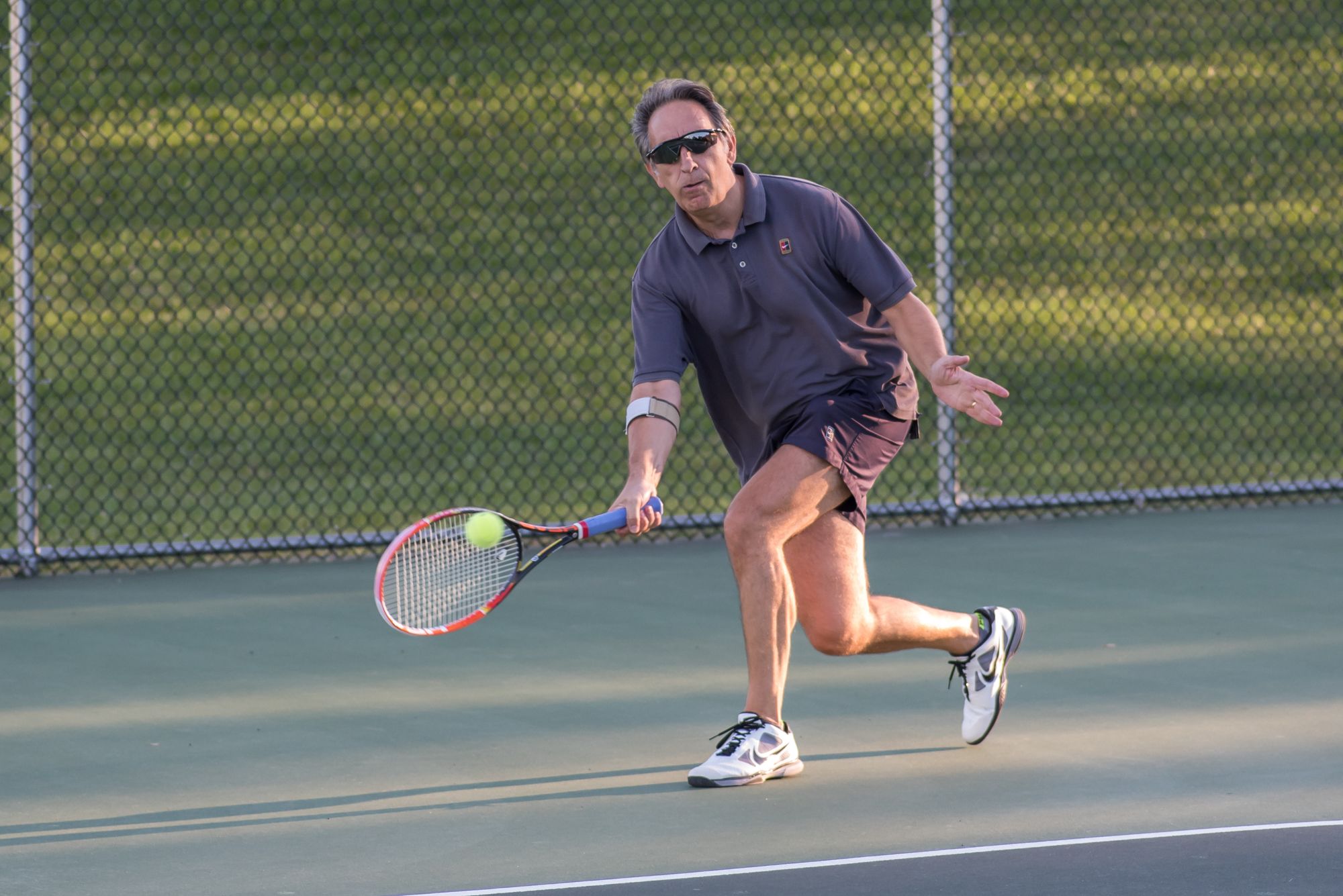
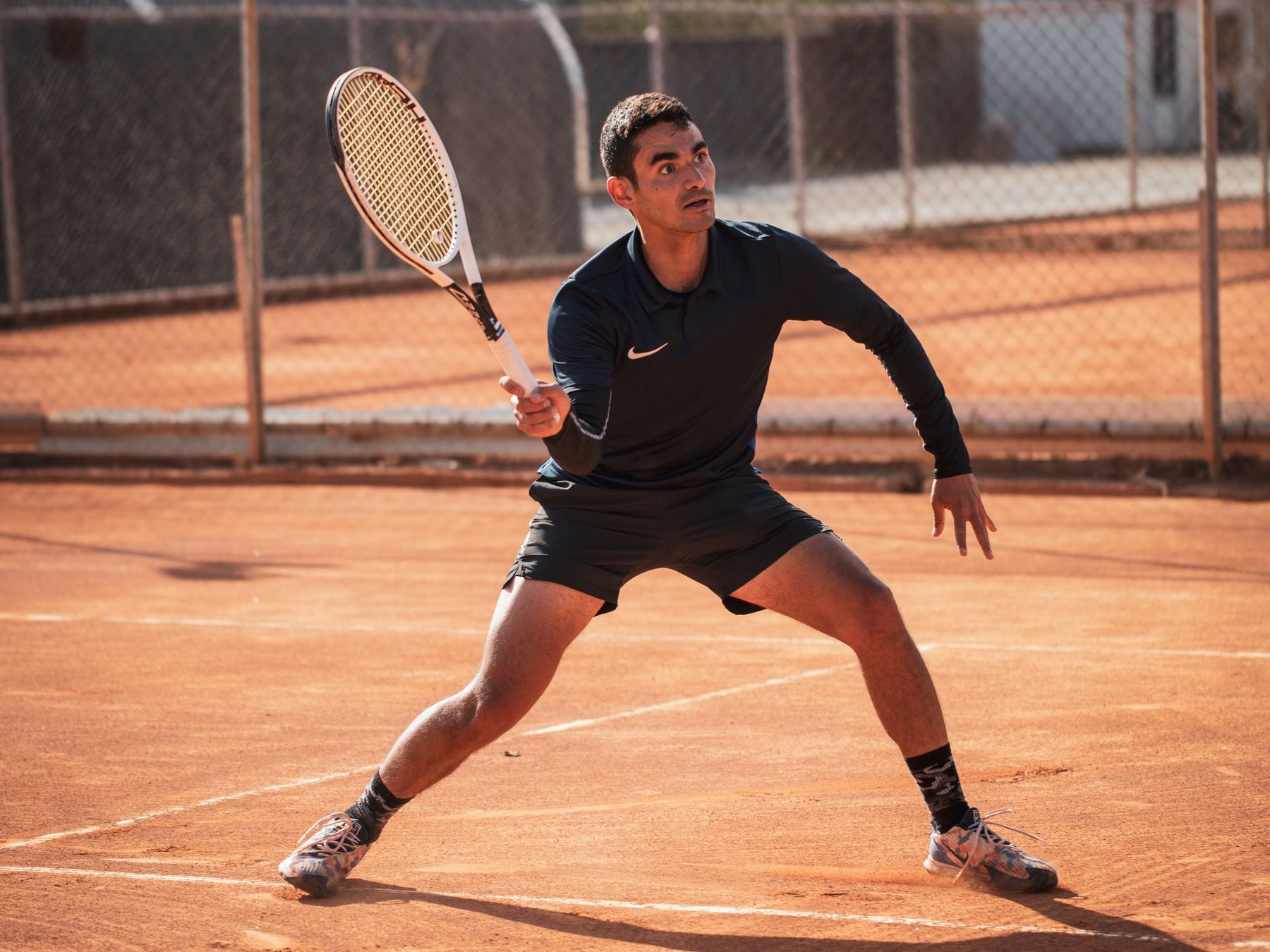
Tennis makes the demand obvious. A player reaches a wide ball, lowers speed, organizes the feet and trunk, strikes, and begins the recovery. The same principle appears outside sport when someone steps off a curb, descends stairs, slows on a hike, or catches a shifting load. The scale changes. The need to manage momentum does not.
Stopping is work
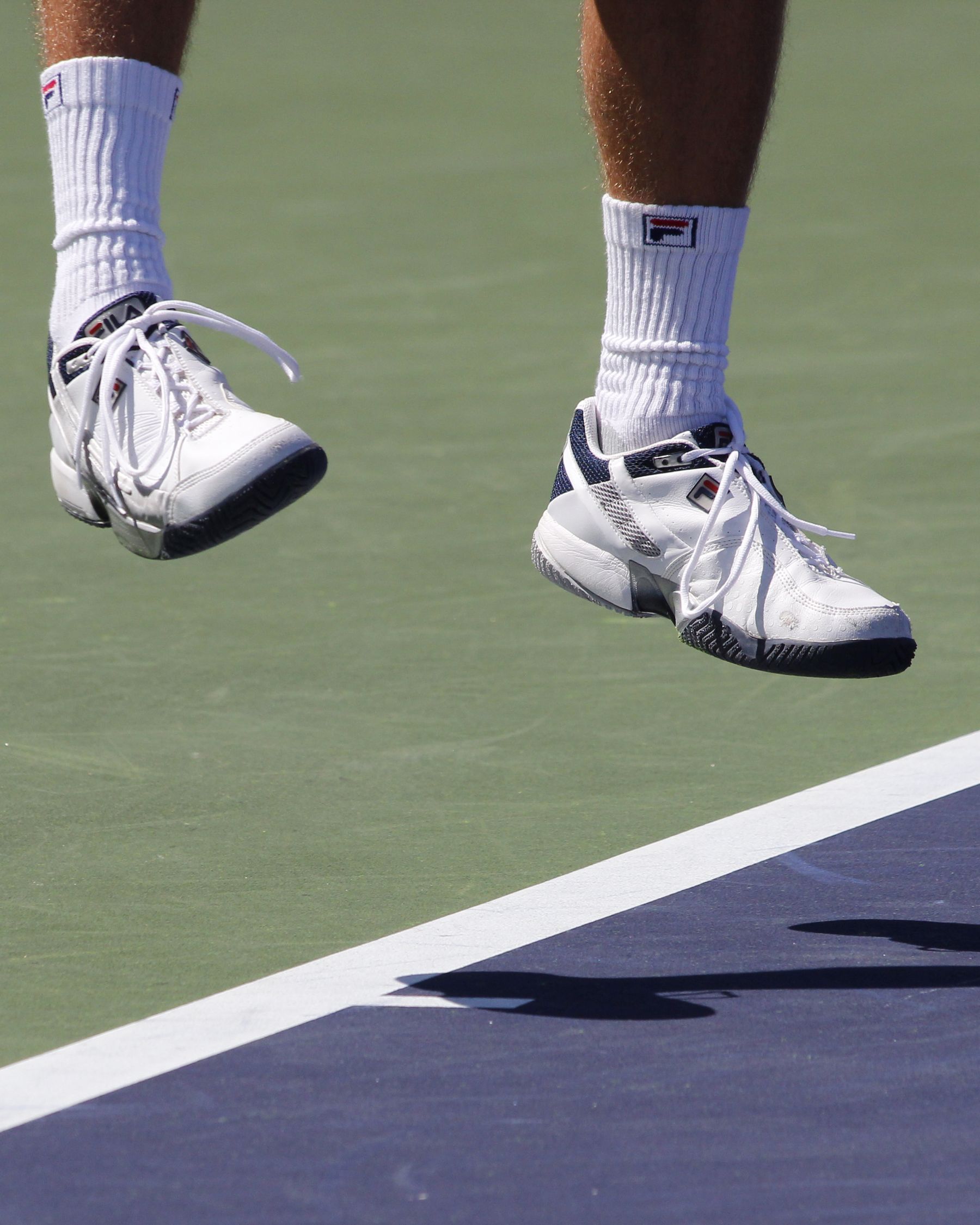
A person does not stop simply because propulsion ends. Muscles continue producing force while the body is moving, often while they lengthen. The foot and ankle help manage contact with the ground. The knee and hip contribute to lowering and controlling the center of mass. The trunk helps organize the body over the base of support. The next step has to be placed where it can influence the direction of travel.
A 2024 laboratory study of maximal horizontal decelerations reported substantial demands at the whole-body, joint, and muscle levels. In that specific team-sport sample and task, the researchers observed particularly high eccentric force requirements in the tibialis anterior, soleus, quadriceps, and gluteal muscles. That study does not prescribe one universal technique, and recreational training should not copy maximal testing by default. It does help explain why braking deserves its own preparation rather than being treated as something that will automatically follow from acceleration work.
Relative strength matters too. In a study of recreational team-sport athletes performing a planned 45-degree change of direction, the stronger group produced greater braking forces and left the change of direction with a faster stride. This was a small group comparison, not proof that strength alone creates good movement. It supports a practical point: if the body lacks force capacity, technique has fewer useful options.
Speed and angle change the problem
There is no single ideal stopping posture. A gradual slowdown from a jog is not the same problem as a sharp turn after a fast approach. A review of change-of-direction biomechanics described an angle–velocity trade-off: as approach speed and turning angle change, so do braking requirements, movement strategy, muscle activity, and joint loading.
This is why coaching deceleration with one frozen position can be misleading. The useful question is whether a person can reduce speed early enough, use enough steps for the task, place the foot effectively, and control the body well enough to leave in the intended direction. A shallow cut may preserve more speed. A deeper turn may require earlier braking across several contacts.
Technique can also be trained. In a six-week nonrandomized intervention involving 25 male multidirectional-sport athletes, two change-of-direction sessions per week improved measures of 180-degree turning performance and altered braking and propulsion mechanics in the training group. The sample was small and athletic, so the results should not be generalized to every adult. Still, the study provides evidence that turning is not only a test of talent. It can respond to structured practice.
Tennis exposes the full sequence
Tennis is a useful longevity-performance lens because it asks several qualities to cooperate. The player reads the ball, moves, brakes, organizes a stroke, and reaccelerates—often with little time and from a different court position on the next point.
Hawk-Eye data from 182 singles matches at the Australian Open identified more than 120,000 medium- and high-intensity changes of direction. The professional players averaged 1.6 changes of direction per point, and about two-thirds of the identified changes involved more than 105 degrees. Those numbers describe elite match play, not a prescription for recreational adults. Their value is in showing that tennis movement is not a collection of isolated sprints. Reducing speed and redirecting it are central parts of the sport.
For an adult player, the training goal is not to imitate professional match volume. It is to prepare for the version of tennis they actually play: their court coverage, movement confidence, weekly frequency, injury history, and recovery capacity.
Build deceleration in layers
A sensible progression begins below maximum speed. The body needs force capacity, but it also needs repeated experience applying that capacity in the right direction and at the right time.
Build the base. Squat, split-squat, hinge, calf, and trunk variations can develop useful lower-body strength. Exercise selection and loading should match the person’s history, symptoms, and current ability.
Practice absorbing force. Controlled lowering, step-downs, landing variations, and low-speed stops can introduce braking without requiring an all-out approach. The objective is quiet control and repeatable positioning, not a dramatic drill.
Add planned movement. Short accelerations into a walk-off, stick, shuffle, or turn allow the athlete to practice reducing speed across one or more steps. Distance, pace, and angle can change one at a time.
Progress the direction and decision. Lateral, crossover, and rotational patterns can follow. Reactive cues belong later, after the person can manage the planned version with appropriate control.
Manage exposure. High-speed braking is demanding. Quality, recovery, court volume, and response over the following day matter more than collecting fatigue for its own sake.
This is Minimum Effective Complexity in practice. A recreational player may need two well-chosen strength movements and a few controlled stops within a normal session. A competitive athlete may need timed approaches, sharper angles, reactive tasks, and closer management of court and gym loads. The systems view is broad; the prescription should remain usable.
SCREEN, TRAIN, and REFER
AEON’s SCREEN / TRAIN / REFER framework keeps movement coaching useful without turning it into diagnosis.
SCREEN: Clarify the person’s sport, training history, recent workload, confidence, recurring symptoms, and the movements that matter. Observe how speed is reduced and redirected at an appropriate intensity. Normal asymmetry is context, not an automatic defect.
TRAIN: Develop the modifiable qualities: lower-body strength, ankle and calf capacity, trunk control, planned braking, multidirectional movement, and—when appropriate—reactive decision-making. Progress speed and angle only as technique and tolerance support them.
REFER: Sudden pain, a pop, rapid swelling, loss of push-off, inability to bear weight, worsening symptoms, unexplained functional decline, or concern about a medical condition belongs with an appropriately qualified clinician. Fitness coaching can support a return to capacity, but it does not diagnose the source of symptoms.
Acceleration is easy to notice. Deceleration is the quieter quality that makes the next action possible. If a program is meant to support tennis, travel, hiking, or confident movement over time, learning to manage momentum belongs in the plan.
Selected research
- Forces experienced at different levels of the musculoskeletal system during horizontal decelerationsVerheul et al., Journal of Sports Sciences. December 2024.
- Effect of strength on plant foot kinetics and kinematics during a change of direction taskSpiteri et al., European Journal of Sport Science. 2013.
- The Effect of Angle and Velocity on Change of Direction Biomechanics: An Angle-Velocity Trade-OffDos’Santos et al., Sports Medicine. October 2018.
- Change of Direction Speed and Technique Modification Training Improves 180° Turning Performance, Kinetics, and KinematicsDos’Santos et al., Sports. May 24, 2021.
- Quantifying Change of Direction Movement Demands in Professional Tennis Matchplay: An Analysis From the Australian Open Grand SlamGiles et al., Journal of Strength and Conditioning Research. March 1, 2024.